AI triage chat
RAG-grounded symptom assessment over text, photos, X-rays and vet documents. Interviews one question at a time.
Escalates instantly on emergencies.AI veterinary triage. Symptoms, photos and vet documents feed one retrieval-grounded conversation on a persistent, shareable pet health record — so the answer reasons over this animal’s history, medications and prior conditions, not a generic search result.
453
Across 57 files, with graceful degradation when Redis, email or optional models are absent
12
Chat, records, memory, documents, invites, reminders
7.4k
Lines of Python — routers, services, RAG engine
6.5k
Lines of vanilla JS and CSS — no framework lock-in
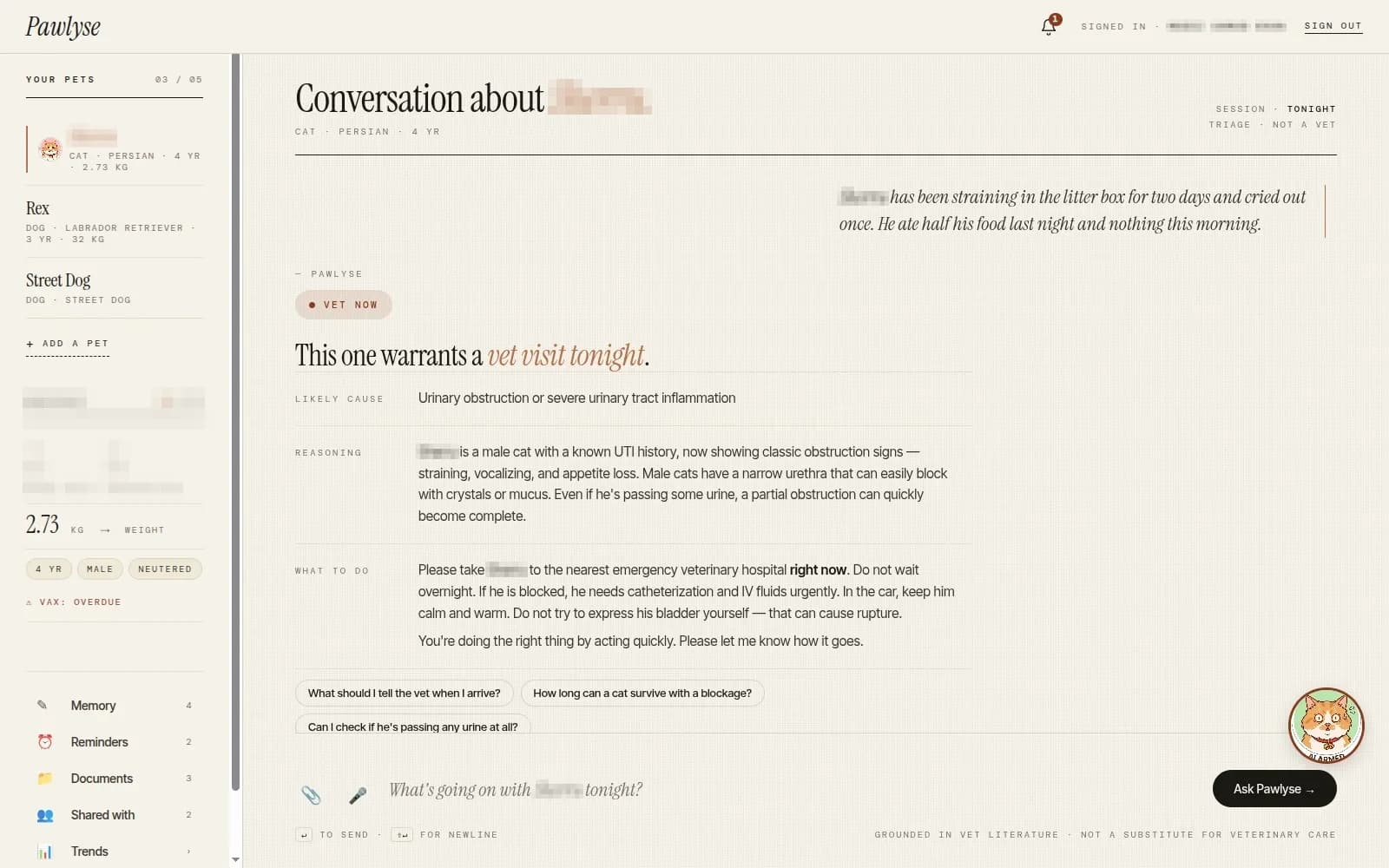
An owner at 2am does not need a list of possibilities. They need a decision: is this a wait-until-morning or a get-in-the-car. Getting that call right means knowing the animal — its species, breed, age, sex, weight, medications and prior conditions.
Every answer reasons over the pet’s profile, history and documents at the same time — one context layer, not three disconnected features.
That is why the triage card can say “male cat, narrow urethra, known UTI history, classic obstruction signs” and escalate without hedging. The same conversation, on a different animal with a different record, produces a different verdict — and the interface never lets go of the disclaimer that this is triage, not a veterinarian.
RAG-grounded symptom assessment over text, photos, X-rays and vet documents. Interviews one question at a time.
Escalates instantly on emergencies.Auto-extracted long-term memory — medications, conditions, allergies — plus document storage with OCR, weight tracking and care reminders.
Pets shared by email invite: family, sitters and vets reach the same record and the same conversation.
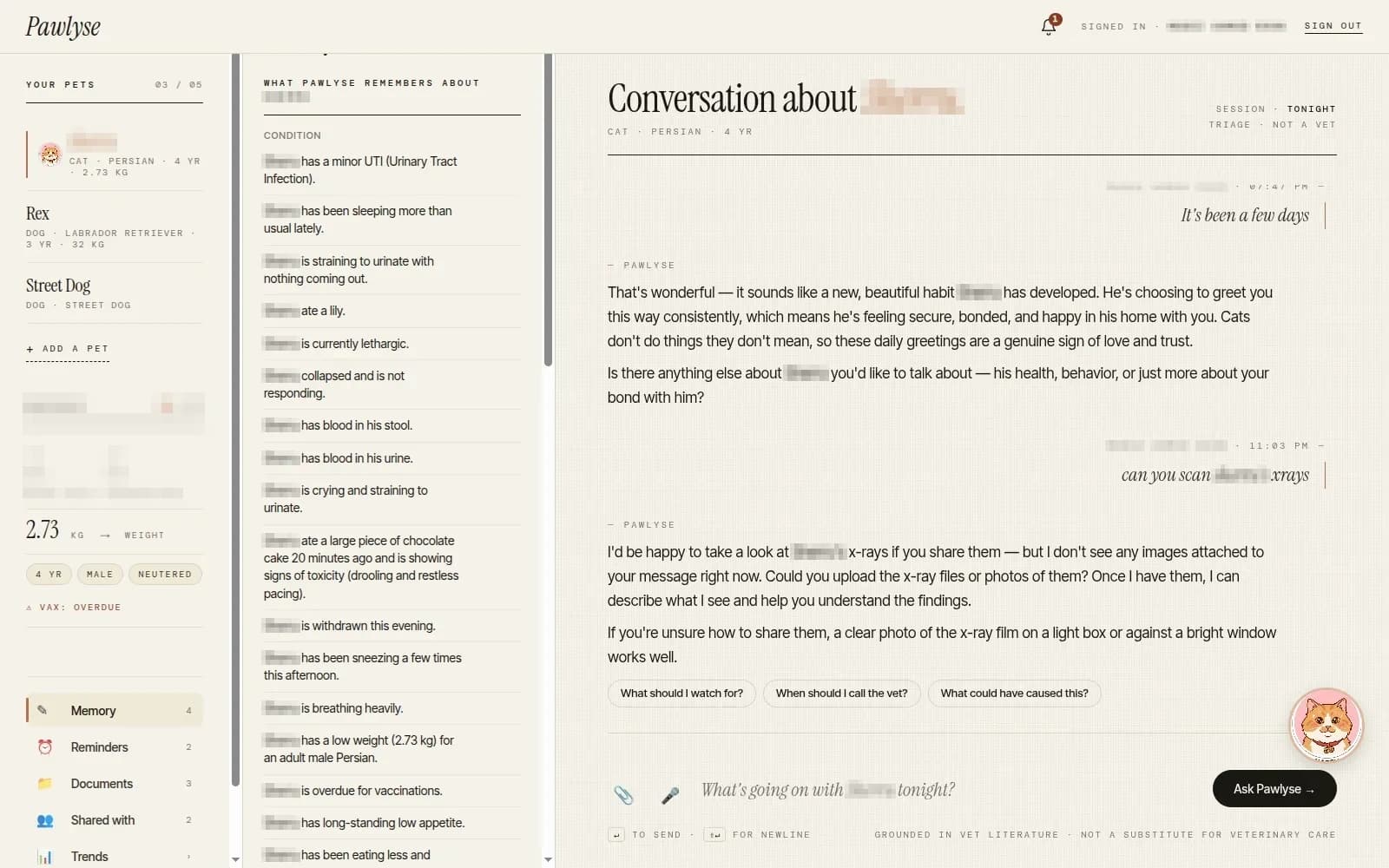
Facts are extracted from conversation as it happens and written back to the record, which is why an offhand remark weeks ago (“he ate a lily”) is still available the night it matters. The panel is deliberately unglamorous: a memory system you cannot inspect is a memory system you cannot trust.
POST /chat — structured AI triage, JSON or multipart with attachments.POST /documents — vet paperwork and imaging, OCR’d on upload and indexed for retrieval.