03Sumero

A longevity platform whose AI knows when to refuse.

An AI-native longevity platform. A multi-model reasoning engine sits behind intent routing and safety guardrails, answers from the member’s own labs, documents and wearable data through a vector store, and carries a five-layer memory of what matters about them across every conversation.

Memory layers

5

Safety · clinical baseline · active plans · longitudinal trends · the human element

Backend modules

46

NestJS modules behind one authenticated API

ML service

138k

Lines of Python across 593 files

Member app

30.4k

Lines of React 19 + Vite

Role

AI / ML + platform engineer — reasoning engine, retrieval, memory, API and deployment

Year

2026

Stack
PythonFastAPIQdrantNestJSPostgreSQLRedisReact 19
Services

AI engineering · Backend · Frontend · Integrations · Security posture

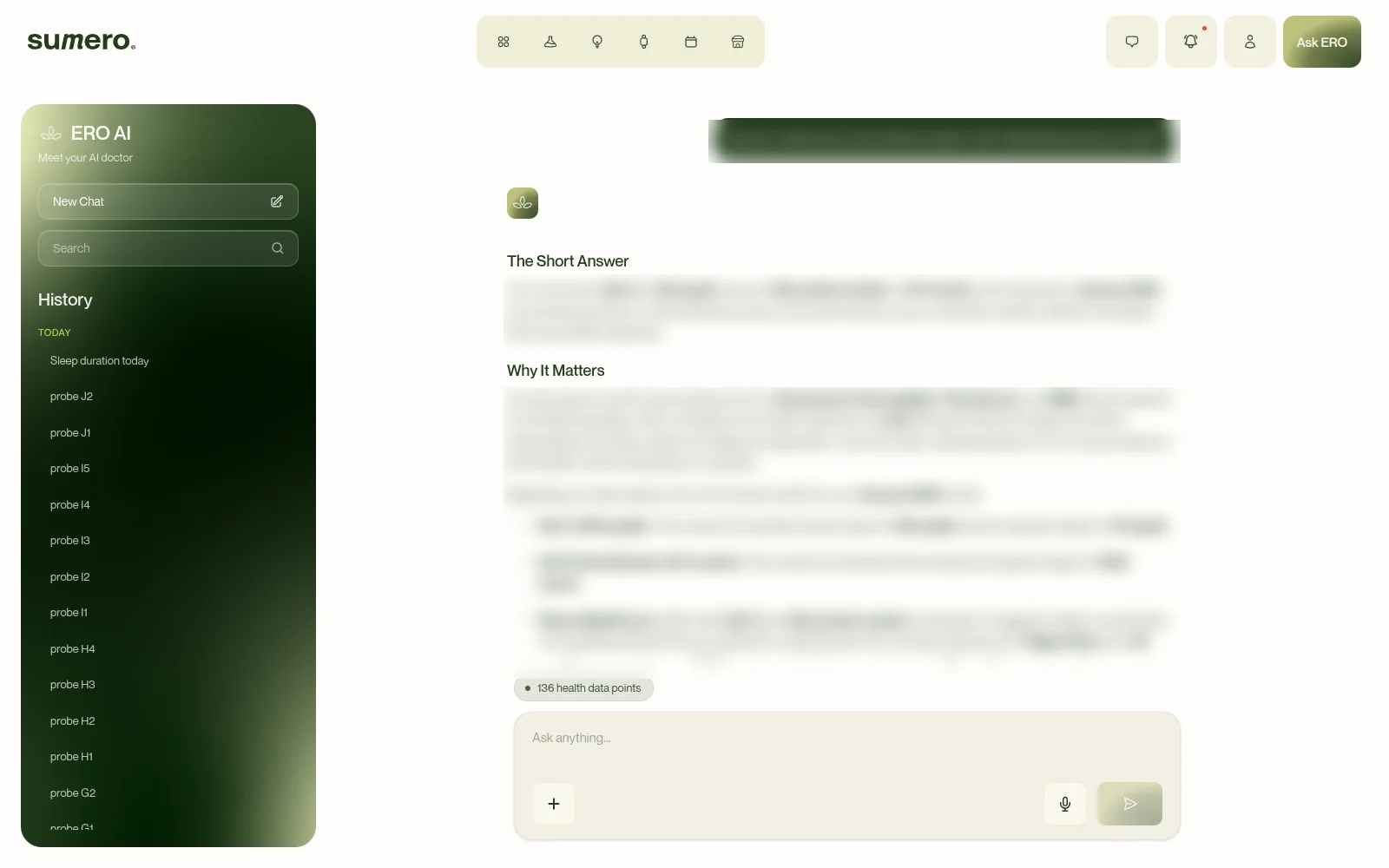
The Sumero ERO assistant answering a question about lipid markers and refusing to assess hormone status
The refusal. Asked what to focus on, ERO gives the short answer, cites the member’s own lipid markers with the month they were measured — then stops. The lab file contains markers specific to a different physiology than the profile states, so it declines to assess hormone status until the discrepancy is resolved and tells the member exactly how to resolve it. Note the shape of the answer: structured headings (“The Short Answer”, “Why It Matters”) are enforced rather than hoped for, the composer carries a live count of the health data points the answer was drawn from, and every response closes on the same standing disclaimer.

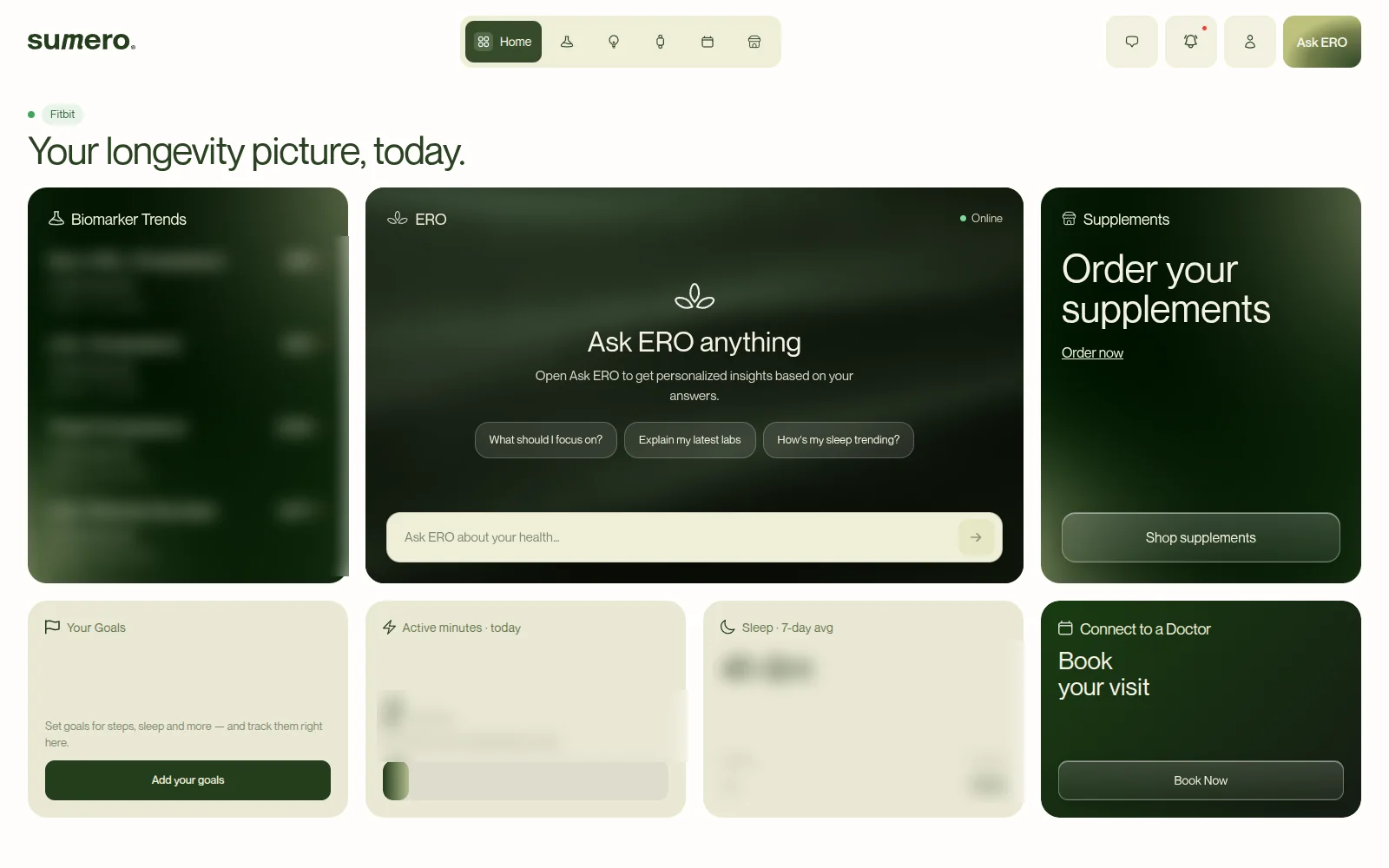
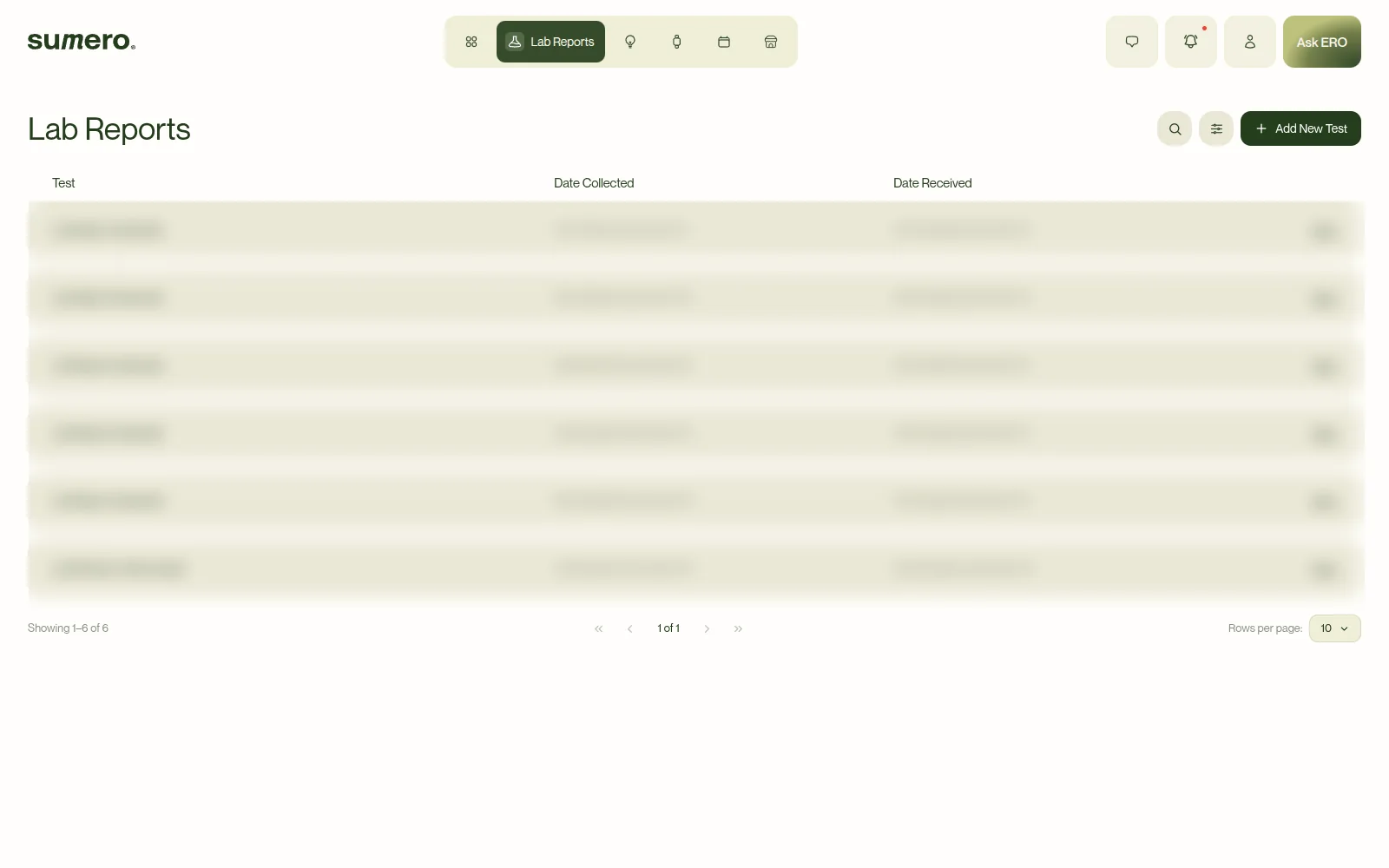
Every value, lab result and clinical detail in these screenshots is blurred. Sumero holds real member health data; only the structure of the interface is shown here.
01

The part most teams overpromise

The difference between a demo and something you can put in front of real users is not answer quality on a good day — it is behaviour on a bad one. The screen above is the bad one: contradictory source data, a question that cannot be safely answered, and a model that has to notice.

Every message passes through a control layer before generation — intent classification, out-of-scope and emergency detection, then safety guardrails.

The routing layer classifies what a message actually is (a question, a request for coaching, a data lookup, an emotional moment), detects emergencies before a response is generated, and adapts depth and tone to the situation. A fast model handles routing and classification; a heavier one handles clinical reasoning. Models run locally for cost control and privacy with cloud fallback for resilience, and providers are swapped by configuration — the client is never locked in.

02

Five layers of memory

Generic chat forgets. A longevity product cannot: the whole proposition is that it gets smarter about one person over years. Memory is split by what the fact is for, because the layers have different retention, different retrieval priority and very different consequences if wrong.

Layer 01

Safety-critical

Allergies and contraindications.

Never dropped from context.
Layer 02

Clinical baseline

History, conditions, medications — the standing picture of the member.

Layer 03

Active plans

Current protocols and interventions the member is actually on.

Layer 04

Longitudinal trends

Biomarker movement over time — the direction, not just the latest value.

Layer 05

The human element

Goals, preferences and communication style — what makes the answer land.

Retrieval

Grounded, not remembered

Uploaded PDFs are processed, chunked, embedded into Qdrant and searched on demand, so answers cite the member’s real documents and lab results instead of model recall.
03

The screens

04

Engineering notes

Platform shape

  • Two cooperating services. A NestJS API is the only thing clients talk to; it proxies AI calls into an internal FastAPI service over an internal-key + user-identity header contract. The ML service is never publicly reachable.
  • Authenticated by default. The auth guard is registered globally, so every route is protected unless a handler explicitly opts out — the safe direction for a health product.
  • Throttling is global too, with stricter per-endpoint limits opted into where abuse actually matters.
  • Queues and infrastructure: Redis-backed BullMQ for background work, Qdrant for vectors, Postgres for records. The API refuses to boot if Redis is unreachable rather than degrading silently.

Posture and integrations

  • HIPAA-grade posture: httpOnly cookies with cross-site-safe flags in production, security headers and HTTPS redirect at the edge, and an explicit CORS allow-list from environment.
  • Wearables, labs, payments, video, email and cloud storage all integrate behind the same service layer, so the member’s picture is assembled from the tools they already use.
  • A clinician is always one click away — the product routes to a human rather than pretending to be one.
  • Deployment is a single scripted path: build, provision the Python environment, then run both processes side by side under a process manager.
Next

Need an AI product that holds up under real users?

Start a project
DEVSTEEM